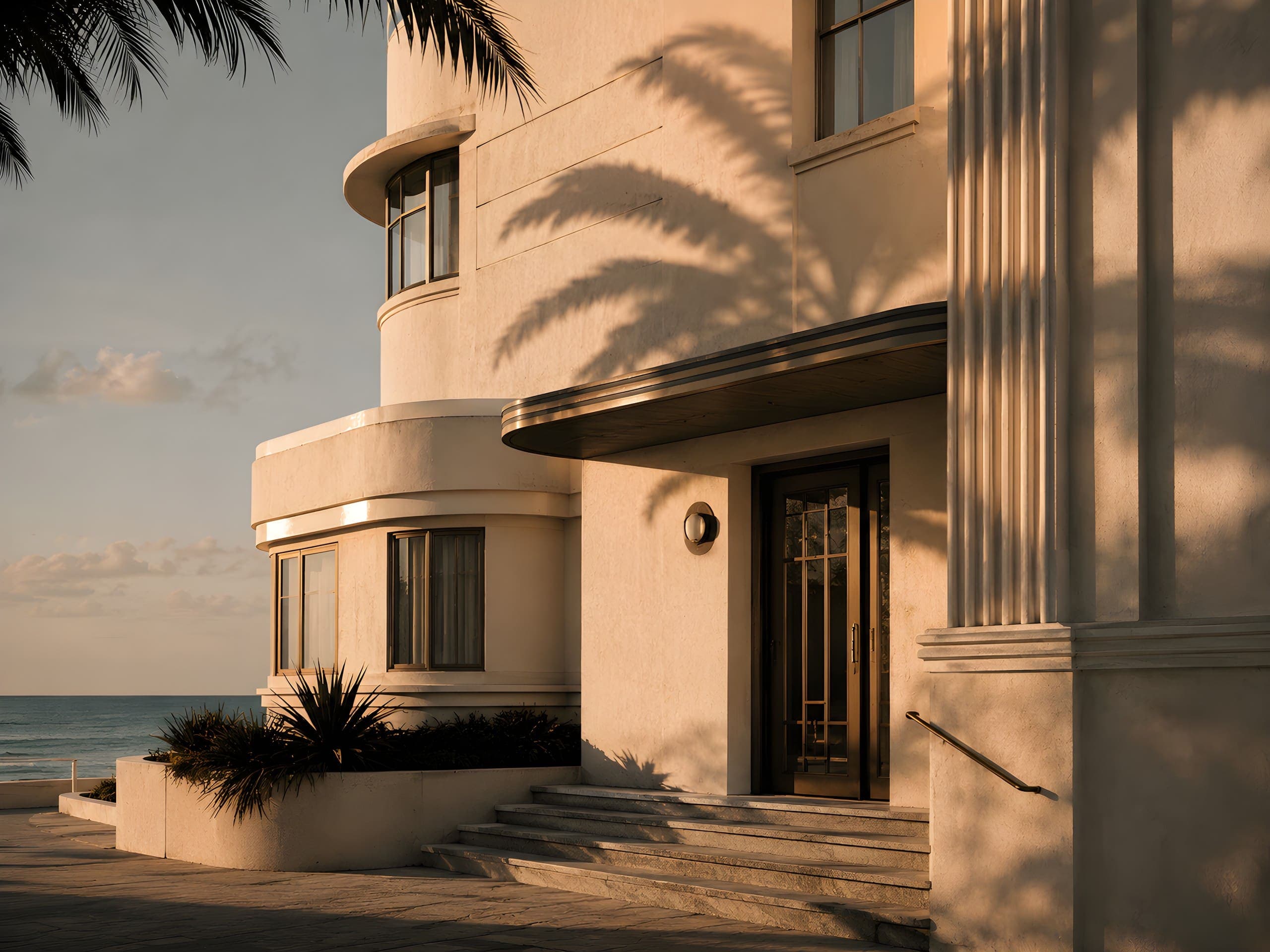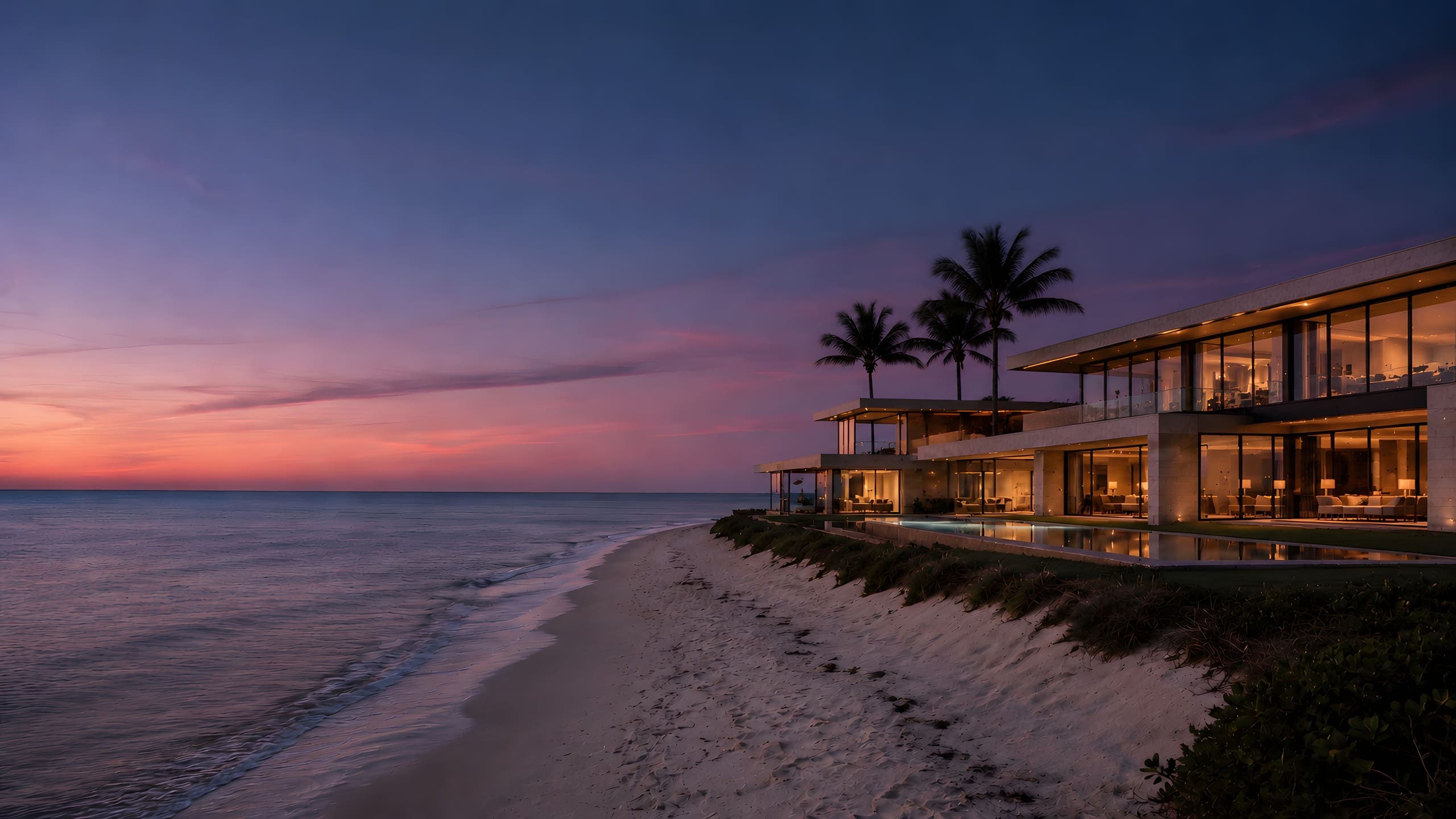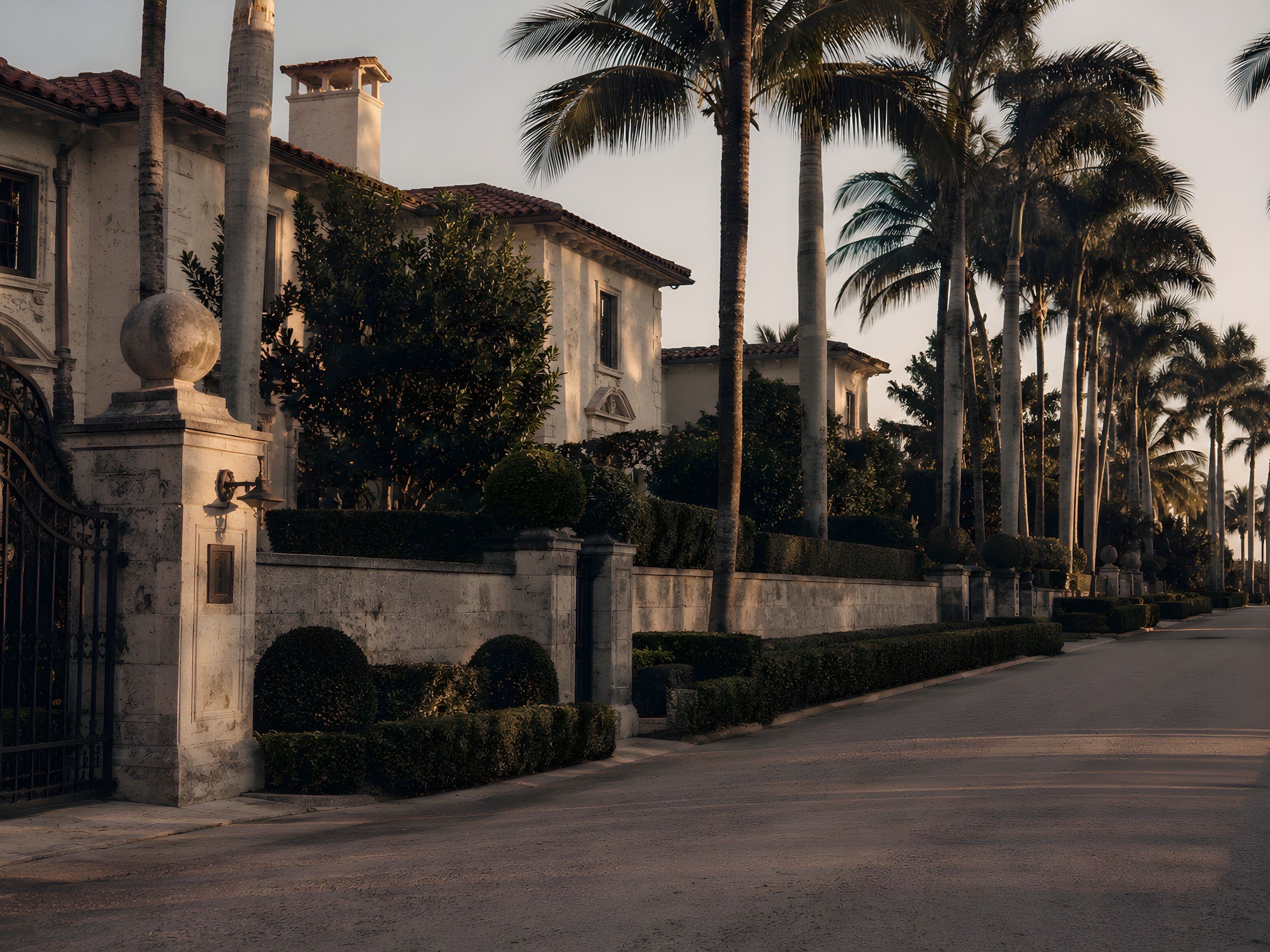
The tax consequences of moving from New York to Palm Beach are the same as any relocation to Florida. The housing decision is not. Palm Beach County is four markets carrying one reputation: the island itself, West Palm Beach across the Intracoastal, the equestrian corridor at Wellington, and the golf and country club communities inland. Most buyers arrive fixed on the island and end up somewhere else, generally to their benefit. The ones who do this well choose by the shape of their week rather than by the weight of an address.
The reason the corridor changed character is that the work followed the money. Since 2020 a genuine office cluster has established itself in West Palm Beach — asset managers, private equity firms, hedge funds, and single-family offices occupying new Class A space along Flagler Drive and the Okeechobee corridor, with a development pipeline that has continued to expand behind them. What was for a century a seasonal and retirement address is now a working one. The housing consequence is direct: demand has shifted toward residences within a short and reliable commute of downtown West Palm Beach, not merely toward a house that is pleasant in February.
The island runs roughly sixteen miles and divides into three well-understood parts. The Estate Section south of Worth Avenue, between the ocean and the lake, holds the largest properties and the deepest scarcity. The In-Town blocks around Worth Avenue offer condominiums and smaller houses within walking distance of the shops and the clubs. The North End has more modest lots, a stronger year-round rhythm, and, for many families, the better version of island life. Supply is fixed and will remain so. Zoning is restrictive, and the town's architectural and landmarks review governs what may be built, altered, or demolished. Buyers who intend to renovate or replace should price the entitlement calendar in years, not months, and should treat approval risk as part of the purchase price.
West Palm Beach deserves consideration on its own merits rather than as a compromise. Across the bridges are the Flagler Drive waterfront buildings and the historic neighborhoods behind them — El Cid, Prospect Park, the blocks south of Southern, Northwood — with real architecture, mature streets, and pricing that bears no relation to the island. Add proximity to the office cluster, Brightline service south to Fort Lauderdale and Miami, and Palm Beach International ten minutes from the front door. For a principal still working, with school-age children and a New York calendar, the mainland frequently serves the actual week better than the island does.
Schools have become the constraint more often than housing. The county's independent schools — among them Palm Beach Day Academy, Rosarian, the Benjamin School, Oxbridge, and Saint Andrew's further south — absorbed a great deal of demand as the migration accelerated, and admission runs on its own calendar, with applications generally filed in the autumn for the following August. Families who choose the house first and apply second routinely find themselves living in the wrong place for the school that eventually says yes. Sequence the school, then the neighborhood, then the house.
Water, golf, and horses are three separate markets with three separate diligence lists. On water, the governing question is not the view but the route: fixed bridges impose air draft limits, and a dock is only as useful as the passage from it to the Palm Beach or Lake Worth inlet at the tide and draft your vessel actually requires. On golf, club membership is a separate application and, at the better clubs, a separate waiting list — in some communities an equity membership is tied to the property and in others it emphatically is not, and no buyer should assume the house conveys the club. At Wellington, the season runs January through April around the Winter Equestrian Festival, and farms are priced on stabling, footing, and hacking access to the showgrounds; the seasonal rental market there is an economy unto itself and worth understanding before buying.
On sequencing, the season governs. South Florida's deepest inventory and most serious counterparties appear between November and April, and the island in particular is a different town in July than in February. The order that works is to bring the New York property to market in late summer or early autumn so that a contract is in hand as the season opens, then buy into that season with cash certainty behind you. Where the New York asset is a cooperative, add sixty to ninety days for the board and build it into the plan rather than discovering it. Because we are licensed in both states, we set the two calendars against each other at the outset — the Palm Beach inspection and financing periods, the New York board timeline, and the closing dates planned as one instrument rather than two.
The tax and domicile framework is identical to the rest of Florida and merits the same discipline. No state income tax, no state estate tax, homestead assessed-value growth capped at three percent or the consumer price index, ownership and occupancy on January 1 with the filing due by March 1. New York-source income remains New York-taxable. And the statutory residency test — a permanent place of abode in New York plus more than 183 days in the state — catches a particular Palm Beach pattern: the household that relocates in principle but keeps the northern house and returns for most of the summer and much of the autumn. That arrangement is entirely legitimate, provided the day count supports it and the record is contemporaneous. New York's auditors examine where the physicians are, where the vehicles are registered, where the art hangs, and where the dog lives. They are not being whimsical; those are the facts that distinguish a domicile from an assertion.
What surprises people, in order of frequency. The season is real, and a buyer touring in July is seeing a town that does not exist in February. Millage differs meaningfully between the Town of Palm Beach, the City of West Palm Beach, and the unincorporated county, so two houses at the same price can carry very different annual bills. Insurance underwriting — roof age, opening protection, elevation, flood zone — often determines what is affordable more decisively than the purchase price does. Club admission is social as well as financial and cannot be accelerated with money, which is a genuine adjustment for buyers accustomed to markets where it can. And the mainland house that looks close to the island on a map may sit forty minutes away in bridge hour.
Because Luxury Realty International is licensed in New York and in Florida, a client moving on this corridor is represented by one broker on both ends, with a single timeline and a single fiduciary duty running from the New York listing through the Palm Beach closing and the domicile file that follows. Our Relocation Concierge holds that calendar. For the family whose plan eventually points somewhere we are not licensed, our Referral Desk places them with a vetted local expert — interviewed, production-verified in the relevant price range, and contractually held to a forty-eight-hour contact standard, at no cost to the client.